Everyone's talking in the Middle East -- but us
COMMENTARY | May 149, 2008
A former CIA station chief writes that in Lebanon and elsewhere, consequential conversations are taking place that are critical to our national interests. But because we refuse to talk to such major players as Iran, Hamas, Hezbollah and Syria, we're not involved.
By Haviland Smith
twopond@comcast.net
The Lebanese tell a story about themselves that is ironically revealing of the virtually constant troubles that have plagued their country since the 1948 Arab-Israeli war.
It goes as follows:
When God created the Earth, he saved what is now Lebanon for last. He threw up magnificent, snow-covered mountains, cedar, apple and pear trees and flowers. He added crystal clear rivers and streams filled with fish and a beautiful high desert. In the west, along the bountiful Mediterranean Sea, he created beautiful white sand beaches and majestic rocky cliffs rimmed by date palms.
God stood back and looked. He thought that such beauty and bounty, when compared to the rest of the world, simply wasn't fair. No other place on the face of the earth was as special, so to compensate for that, he installed the Lebanese people as its residents.
It's hard to know what God meant by that, but the practical reality is that Lebanon is populated by virtually all of the factions that are at such odds today in the rest of the Arab world. Sunni, Shia and Christian with small sprinklings of Jews and Druze are among the sectarian groups that remain in Lebanon.
Lebanon is a political and sectarian microcosm of all the issues that have ruled in the Middle East over the past 50 years and is, sadly, not immune to any of them. When the Middle East falls apart, Lebanon falls apart internally with it.
Lebanon has been settled for over 5,000 years. Byblos is the oldest, continuously inhabited city in the world, having existed since before 3000 B.C. In more recent times, under the Ottoman Empire, Lebanon was a part of Greater Syria. At the end of World War I, Lebanon became a part of the French Mandate of Syria and remained so until 1926, when the French created the Lebanese Republic. Lebanese independence was gained in 1943.
Because of the pressures caused by its religious diversity, Lebanon has long had an unwritten political agreement. The national pact establishes that the president of the republic will always be a Maronite Christian, the prime minister a Sunni, the president of the national assembly a Shia and the deputy speaker of the parliament a Greek Orthodox. In addition, representation in the parliament has to be maintained at six Christians to five Muslims.
Clearly, the Christian French Republic had a large hand in this, virtually guaranteeing that Christians would be in charge of Lebanon long into the future. It is said that in the early years of the Lebanese Republic, when many Christians were emigrating to the West, the Christian majority, which has for some time been doubtful, was maintained along with the validity of the national pact by counting the overseas Christians as citizens of Lebanon. This has not eased tensions in Lebanon, because Muslims, the real majority in their country, have increasingly felt disenfranchised.
Recent events have finally threatened the accepted political structure. Hezbollah, which is designated a terrorist organization by the United States and Israel, had its origins in Shia Lebanon during the 1982 Israeli invasion. It is trained and funded by Iran. However, rather than evolving into a strictly terrorist organization – and it certainly does conduct terrorist operations – Hezbollah has firmly planted its roots in the large Shia community of Lebanon. It runs clinics, radio and television stations and welfare operations. It takes care of its people, is widely supported by the Lebanese Shia community and holds seats in the Lebanese Parliament, although far fewer than true per capita representation would probably bring it. Today, Muslims hold 64 seats in the parliament and Christians 64.
The population of 4 million Lebanese breaks down roughly into 1 million Shia, 1.4 million Sunni and 1.6 million Christians, comprised of Maronites (Catholic), Greek Orthodox, Armenian Apostolic, Greek Catholic, Coptic and Syrian Orthodox.
The endemic, Muslim-wide, Shia-Sunni tensions are very real in Lebanon. The profusion of Christian sects has often resulted in shifting, often unpredictable alliances between various Christian and Muslim factions which have further complicated the situation.
In addition, Syria has always felt that Lebanon should be part of Syria. Their irredentist passions have often caused them to interfere in Lebanese politics, causing immense internal political pressures there. Then there is the wild card of U.S. involvement in the Middle East, particularly given its immense hostility to Iran and Hezbollah.
The current Lebanese government is strongly supported by the United States. Apparently concerned about Hezbollah preparations for another war with Israel, it recently provoked a showdown with Hezbollah, probably with urging from the Bush administration. The government tried to preempt Hezbollah's dedicated communications network and removed both a Hezbollah surveillance camera and the Lebanese installation commander, a Hezbollah sympathizer, on whose turf it was installed. Hezbollah responded by taking to the streets. In short order, they controlled much of Beirut and met with virtually no resistance from the Lebanese Army which clearly saw it could not win such a battle.
The important fact to remember is that Hezbollah is Shiite and supported by Iran. Add to that the fact that Hezbollah embarrassed the Israeli Army last summer in Lebanon and you can see that it is a total anathema to the Bush administration which has refused any kind of substantive contact with Iran or Hezbollah on these issues.
Today, Europe is conducting talks with Hamas, which Iran also supports. The Arab League is actively involved in Doha, trying to mitigate Lebanese violence. The Lebanese factions have already reached some political accommodation in talks in Doha. The Syrians are holding Turkish-mediated "indirect talks" with Israel on a "comprehensive peace agreement."
All of these discussions are taking place without the involvement of the United States. This fact underlines our almost total isolation in the Middle East. We are isolated because we have no leverage in the area. We have nothing we are prepared to give up that anyone wants. What is wanted from us is: the end of the U.S. military occupation of Iraq; the end of U.S. support of repressive, non-representative Arab regimes; the removal of U.S. troops from holy Muslim ground in Saudi Arabia and a just peace for Palestine.
There is a lot of political movement taking place in the Middle East right now. Just about everything that happens there will affect us directly. It is most certainly in our national interest to see that we have our input. Yet, we refuse to talk to the real players in the area – Iran, Hamas, Hezbollah and Syria – who will directly affect the outcome. If what little leverage we have offers the hope of a positive outcome for us as well as the region, why are we not more heavily involved?
Playing our hand according to our own national interests would ease many of our current political, military and economic troubles. It is a national shame that we are not involved in these processes and using what leverage we have. It may be a very long time before we get another shot like this.
(Reprinted with permission of the author from the Rutland (Vt.) Herald.)
|
|
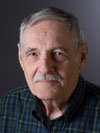
Haviland Smith is a retired CIA Station Chief who served in Eastern and Western Europe and the Middle East, as Chief of the Counterterrorism Staff, and as Executive Assistant in the Director’s office. 
E-mail: twopond@comcast.net
|