| Home | Blog | Ask This | Showcase | Commentary | Comments | About Us | Contributors | Contact Us |


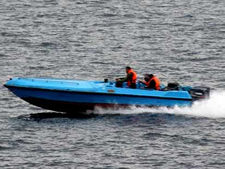
Will the next president talk to Iran?ASK THIS | January 16, 2008The head of the National Iranian American Council suggests questions presidential candidates should be asked about relations with Iran. By Trita Parsi Incidents at Sea Q. Just recently, an incident in the Strait of Hormuz in the Persian Gulf almost led to a military confrontation between the U.S. and Iran. The naval incident reminded the world that, despite the damper of the recent National Intelligence Estimate’s findings, there is still a risk of an accident or provocation in the Persian Gulf sparking a wider conflict. Would you support negotiating an incidents-at-sea agreement with Iran to reduce the risk of a confrontation in the Persian Gulf? There is historical precedent for such an agreement: during the Cold War, the U.S. signed Incidents-at-Sea agreements with the Soviet Union and China. The aim was to avoid accidental warfare by deepening the military-to-military communication between the various parties. Such an agreement could stipulate advanced notice on military maneuvers; assistance in disaster management at sea; and possibly new communication links and improvements in the present interactions between the two navies. (See New York Times, Incident at Sea, January 11, 2008, and Kaveh L Afrasiabi, Growing need for US-Iran confidence steps, AsiaTimes.com, Sep 18, 2007). The US-Soviet Incidents at Sea (IncSea) agreement was quite successful in minimizing the number of incidents between ships and aircraft of the two navies, thus reducing the danger of the inadvertent escalation of a minor incident at sea into something far more serious. (See Bernard D. Cole, Beijing's Strategy of Sea Denial, China Brief, Volume 6, Issue 23, November 22, 2006). Conditions for Negotiations Q. The Bush Administration has offered to negotiate with Iran over the nuclear issue, but with the precondition that Iran must first halt its entire enrichment program. This precondition is credited with ensuring that no diplomacy takes place between the U.S. and Iran. Would you as president of the United States pursue unconditional negotiations with Iran in order to prevent a future Iranian nuclear weapons program? The NIE asserts that Iran currently does not have an active nuclear weapons program, but is only enriching uranium for civilian purposes. This, however, has not eliminated the possibility of Iran pursuing a covert weapons program in the future -- though it has, some would say, opened a window for negotiations. In May 2006, Condoleezza Rice offered to talk with Iran if Tehran verifiably suspended its enrichment program. Iran refused, but agreed to unconditional talks. The official justification for the precondition was that Iran would have too much leverage if it enriched while talks took place. The Iranians would “essentially [be] holding a gun to our heads” if the negotiations took place while Iran was enriching, former vice presidential aide Aaron Friedberg said on the PBS NewsHour on August 22, 2006. (See also Rice proposes talks with Iran, CNN, May 31, 2006.) At the time, Iran operated probably no more than 200 centrifuges. The insistence on the pre-condition, however, essentially granted the Iranians time to pursue their nuclear program without much interference, contrary to the Bush Administration’s prediction and wishes. About a year later, Iran operated more than 3,000 centrifuges, significantly strengthening Tehran’s negotiating position. (See Nasser Karimi, Iran Says It Is Now Running 3,000 Uranium Centrifuges, AP, September 3, 2007.) Iran’s Place in the Middle East Peace Process Q. Peace between Israelis and Palestinians has long been an American objective. President Bush is currently in the Middle East to give peace a push – and to shore up support against Iran. Some critics argue that the president’s rhetoric on Iran is undermining his peace efforts since the greater the antagonisms are between the U.S. and Iran, the more likely Iran is to undercut U.S. initiatives. Do you agree? How would you approach the Middle East peace process? In “Treacherous Alliance – The Secret Dealings of Israel, Iran and the U.S.” (Yale University Press, 2007), I show how the Tehran government initially sought to participate in the 1991 Madrid conference and did extensive outreach to U.S. officials. Washington’s decision to exclude Iran from the Madrid conference and the ensuing peace process strengthened the hands of hardliners in Iran who preferred a much more bellicose policy vis-à-vis the U.S. and Israel. As the U.S. adopted the Dual Containment policy (the idea of isolating both Iran and Iraq), Tehran perceived this as an American effort to create a new regional order based on Iran’s prolonged isolation. The weakest link in that strategy, Tehran calculated, was the peace process. Consequently, the Iranians started targeting the peace process in the hope that its failure would lead to the collapse of the entire U.S. strategy. Even though Iran was weak at the time, and the U.S. was at its military and diplomatic peak, the Iranians succeeded in undermining the peace process in order to avoid the isolation they feared they would end up in had it been successful. Today, the argument goes, the tables have turned. The U.S. is in a quagmire in Iraq and the Iranians are riding high. Yet the Bush Administration is pursuing the same policy that failed more than a decade earlier. It is unlikely that a strategy that failed under much better conditions would suddenly succeed under today’s much less generous circumstances.
|
|