| Home | Blog | Ask This | Showcase | Commentary | Comments | About Us | Contributors | Contact Us |


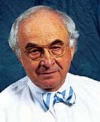
Phil Meyer on what to look for in covering pre-election pollsCOMMENTARY | January 14, 2008The renowned journalist-pollster offers a 5-point checklist. He sees primaries as more difficult to poll than general elections and has no problem with focusing on the horse race. By Philip Meyer Here are five things to think about while covering pre-election polls. 1. Making accurate election predictions in primaries is really hard. It always has been. For most voters, as Paul Lazarsfeld found out way back in 1940, party identification is their main guide to the voting decision. That guide is neutralized in primaries and referendum elections. When the interviewer asks how a voter is going to decide, the person can’t give a good answer if he or she doesn’t know. But to admit not knowing makes the respondent feel impolite or even ignorant, and so some kind of answer is usually forthcoming. We should always be skeptical of what respondents tell interviewers in primary and referendum polls. They’re not lying, their choices are just mushy. 2. Election outcomes have multiple causes. Journalists like simple explanations, hence the focus on Hillary Clinton’s widely replayed episode of tearing up late in the New Hampshire campaign. But there had to be other contributing causes of her first-place finish. For example, Jon Krosnick, professor of communication, political science and psychology at Stanford, thinks that something as simple as her position on the ballot could have had an effect. New Hampshire listed the candidates in alphabetical order from a random start, which happened to be Z. Thus Clinton was placed near the top and Obama near the bottom of the ballot – worth as much as 3 percentage points to Clinton in Krosnick’s estimation. (Questionnaire design is one of his research specialties.) 3. Don’t obsess over sampling error. The only reason statisticians give it so much attention is that it is easy to estimate. But those estimates assume that every member of the voter population has an equal chance of being interviewed. That’s hardly ever true. The most important source of error these days is probably nonresponse. Telephone polls can’t help focusing on the people who are easiest to reach. How do they get away with it? Well, it causes no problem when the easy-to-find folks hold the same views as those who are hard to find. But sometimes they don’t. Polls chronically fall short on young people, many of whom can’t be reached by land line, which is the basis of most random-digit dialing. The bias created by under-representing them can be self-correcting because young people are less likely to vote. That could change in an election where they are worried about finding jobs or getting drafted. 4. It’s okay to cover the horse race. It helps build interest. Watching basketball with the score announced only at the end of the game would be pretty boring. But journalists need to drill down into the horse-race data to see where the leaders’ support is coming from. All democracies are run by coalitions of varying interests that figure out how to compromise their differences. More light needs to be shed on the process of creating these coalitions. It’s easier to follow in parliamentary democracies because their multi-party systems allow voters to vote directly for their narrow concerns. Once in office, the diverse winners go through a process of give-and-take negotiation until a governing coalition is formed – hence the expression, “Politics makes strange bedfellows.” In our two-party system, the coalitions are formed in the election campaign. The process needs to be reported so that voters can know whose bed they are being invited to share. Current polls are already starting to show signs that the Republican coalition formed by Ronald Reagan is breaking up. That one paired economic conservatives protecting their wealth with social conservatives hoping to promote their religious values. If those groups split, it could be because the social conservatives are noticing that the economic conservatives never gave them much beyond lip service. 5. Don’t worry about polls affecting the outcome. It’s okay for voters to take information about their peers into account when making their decisions. Polls can be especially helpful when there are more than two candidates because they can enable a citizen to vote strategically. In a five-person field, a poll might show that one’s first choice is running dead last while the second choice has a shot at winning. In that situation, it makes sense to avoid wasting a vote and go for the second choice. Both bandwagon effects – voting for a person because he or she is ahead -- and underdog effects – basing a vote on sympathy for a loser – have been suggested but not confirmed. Even if such effects exist, voters have the right to use whatever information they want in making their decisions. One positive way to use polls to help voters choose in primary elections is to report on trial heats pitting Democrat against Republican hopefuls. Most primary voters want to pick somebody who can beat the candidate of the other party. Early polls can’t predict that with certainty, of course, but they can be a legitimate factor in assessing the probabilities. Pollsters and the journalists who follow them ought to provide the electorate with that information.
|
|